
Dreaming of a Big D1 School? Read This Before Your Student Chooses a Giant University

Updated: Apr 29
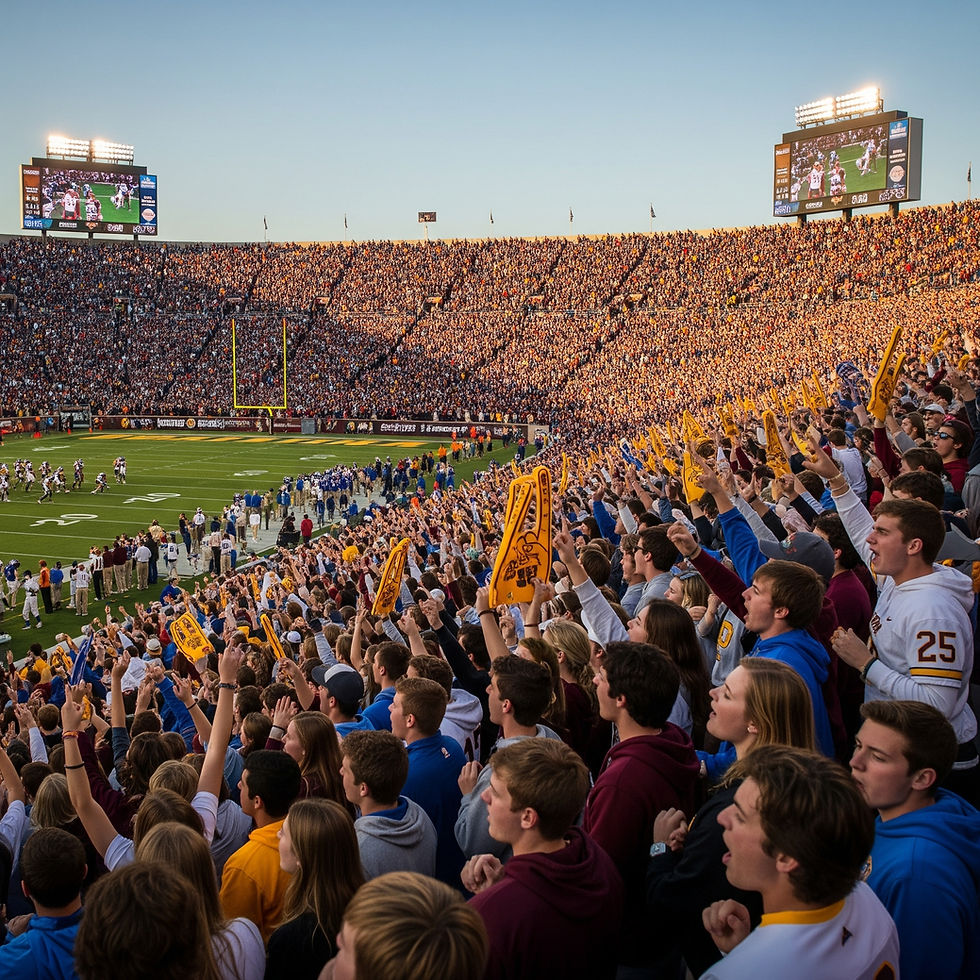
For many college-bound students, the dream is clear: a massive stadium pulsing with school spirit, game days that feel like national holidays, and the electrifying energy of a huge D1 university. Schools like Penn State, Ohio State, and Clemson often top college lists for one reason—the atmosphere.
But while these environments can be unforgettable, they’re not the best academic fit for every student. And when parents wonder why their child’s grades tank freshman year, the answer often comes down to something no one talked about during the college search: How does your student learn best—and does a 40,000+ student university support that?
The Hidden Challenge of Big Universities
Large public research institutions are amazing, but they come with realities students rarely consider:
1. Intro classes can have 300–700 students.
This means:
No personalized questions
Little to no direct access to the professor
Reliance on graduate teaching assistants (TAs)
Fast-paced, self-directed learning
2. Professors may not know your student’s name.
In many large departments, it’s not personal—it's math. With thousands of majors, weekly office hours are crowded, and meaningful mentorship is hard to come by.
3. Students must be aggressively self-advocating to succeed.
Emails, office hours, tutoring centers, advising… students need to seek out support rather than having it come to them.
For independent learners, this setup can be perfect .For others—especially those who thrive with guidance, smaller discussions, or closer relationships—it can be overwhelming.
Real Life Scenarios (That Happen Every Year)
Scenario 1: The Overwhelmed Freshman
Jordan, an A/B student in high school, enrolled at a huge D1 university to “feel the energy.”His Intro to Biology class had 420 students. The professor lectured quickly, streamed content, and rarely took questions.
Jordan didn't realize he needed to attend review sessions led by TAs—so he didn’t. By midterms, he was failing and didn’t know who to ask for help.
His parents later said, “He learned more about football than biology that semester.”
Scenario 2: The Invisible Student
Bella loved her university but struggled in a giant calculus lecture where she felt anonymous. She emailed her professor multiple times but received replies from TAs instead—each giving different advice.
By October, she felt lost, embarrassed, and unsure how to ask for help in a system that felt too big to navigate.
Scenario 3: The Burnout Spiral
Chris had ADHD and did well in high school with structure and teacher check-ins. At his dream D1 school, assignments were posted online with no reminders, attendance wasn't taken, and no one noticed when he started skipping class.
He didn’t fail because he wasn’t capable—he struggled because the environment didn’t match his learning needs.
You Don’t Need to Choose Between School Spirit and Academic Fit
Many families think they can have either:
A big football culture OR
A smaller, more supportive academic environment
But plenty of universities offer both.
Below are schools with strong D1 athletics, spirited campus life, AND smaller-average class sizes or a more personal academic feel:
D1 football, ACC conference
Smaller classes and highly accessible professors
“The Work Forest” reputation for academic mentorship
D1 football, ACC
Known for Jesuit-style student support
Strong advising and smaller discussion-based classes
D1 football, Big 12
More intimate academic environment
Strong faculty-student relationships
D1 football, Big 12
Mid-sized, strong school spirit
Professors who know students personally
D1 football (FCS)
Tons of school spirit
More manageable class sizes than massive flagships
D1 football, Sun Belt Conference
Very spirited campus
Generally smaller introductory classes and supportive faculty
D1 football
Strong sense of community
High-quality teaching and more accessible professors
D1 football (non-scholarship)
Intimate learning environment
Gorgeous campus with high-touch advising
Questions Parents Should Ask Their Student
Before committing to a huge university, ask:
Do you learn best by asking questions in class?
Do you prefer discussion-based learning?
Do you rely on teacher relationships?
Are you comfortable advocating for yourself in a large system?
Do you need reminders, structure, or academic check-ins?
If your student says “yes” to 1–3 or “no” to 4–5, a giant flagship might not be the best first choice—or might require special planning.
Beyond these five questions, make sure your student is prepared for their campus visit with our full list of College Tour Questions.
The Balanced College List: Spirit AND Support
Encourage your student to create a list that includes:
A few big schools (if they love them!)
A few mid-sized spirit schools
A few supportive academic environments with strong campus life
This way, when decisions roll in, your student is choosing between equally exciting—but differently structured—options.
Final Message for Families
A huge D1 university can absolutely be the right fit for many students. The energy, the tradition, the pride—there’s nothing like it. But your student’s success depends far more on their learning environment than the size of a stadium.
The best college list balances:
fit
learning style
support
community
And yes—school spirit
Help your student choose a place where they can thrive academically AND love their Saturdays.
Ready to start building a list? Read our guide on Choosing the Right D1 College: Your Guide to Admissions Success.
Start building your college list today. Schedule your free consultation.


Comments